
The Danger of the Low-Ball Restoration Estimate
Why an unrealistically low number today can become a major budget problem tomorrow
When planning a concrete restoration project, condominium boards and property managers are understandably concerned about cost. When two engineers present dramatically different construction estimates, the lower number can be extremely attractive.
But a lower estimate does not mean a building has less damage.
One of the recurring problems we see in the restoration industry is an initial estimate that significantly understates the probable extent of concrete deterioration. Whether caused by insufficient investigation, overly optimistic assumptions, or an effort to make a proposed project appear more affordable, the result can be the same: the association approves a project believing its exposure is relatively limited, only to discover substantially greater quantities once construction begins.
The Tip of the Iceberg
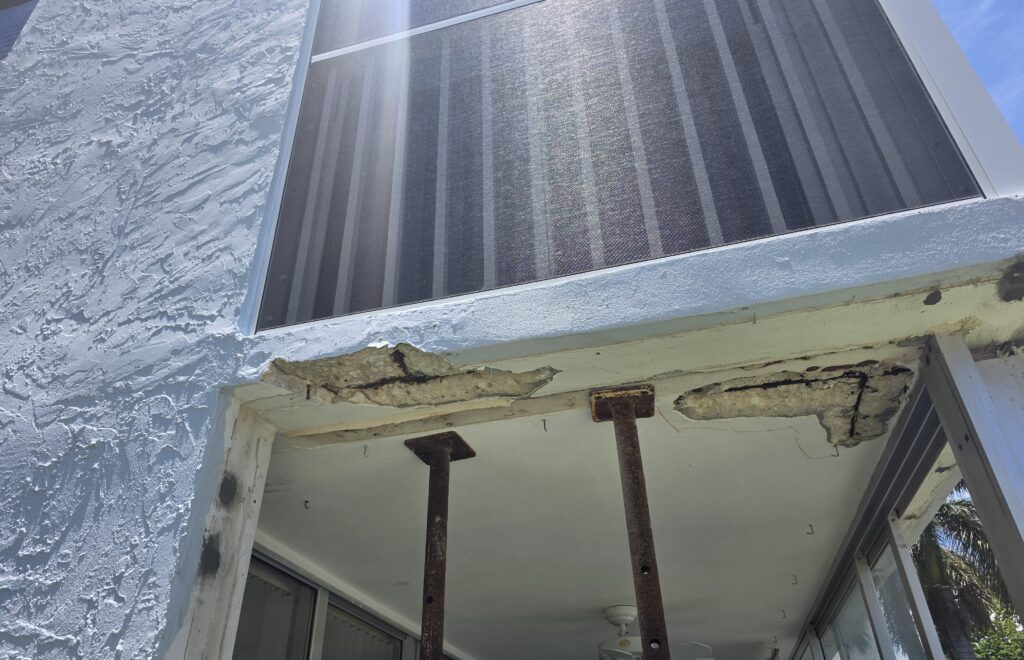
Concrete deterioration caused by reinforcing-steel corrosion is often largely concealed.
An engineer may observe a crack, a small delamination, or an isolated spall at the surface. However, once deteriorated concrete is removed, corrosion can extend well beyond what was initially visible.
We frequently describe this as the “tip of the iceberg” problem.
Experienced restoration engineers understand that visible distress is only one component of an estimate. Building age, exposure to salt air and moisture, previous repair history, observed active corrosion, testing, sampling, and experience with comparable structures all need to be considered when forecasting probable repair quantities.
The Building Is What It Is
Changing engineers does not change the physical condition of the building.
A 30-, 40-, or 50-year-old coastal building that has been exposed to chlorides and moisture for decades will generally experience recurring cycles of corrosion and concrete deterioration. If significant restoration has not been performed for approximately 10 years, it should not be surprising to find additional deterioration.
The question is not simply: “How much damage can we see today?”
The more important question is: “Based on the evidence and our experience with similar buildings, what quantities are reasonably likely to be encountered once repairs begin?”
That distinction can mean hundreds of thousands—or, on larger projects, potentially millions—of dollars.
Beware of the Seductive Number
Boards should therefore be cautious when presented with an estimate that is dramatically below other experienced restoration professionals.
An unusually low estimate may make a project easier to approve and may even help an engineering firm win the assignment. But once construction begins and concrete is opened, the actual deterioration still has to be repaired.
At that point, changing engineers may be difficult, the contractor is mobilized, and the association may have little choice but to approve substantial quantity increases and change orders.
What originally appeared to be the least expensive approach can ultimately become one of the most disruptive.
Estimates Are Not Guarantees
No engineer can see through concrete, and no restoration estimate will predict final quantities perfectly. That is precisely why appropriate investigation, professional judgment, realistic allowances, unit pricing, and contingency are so important.
The objective should not be to produce the lowest possible number.
The objective should be to produce the most realistic budget reasonably supported by the available information.
After decades of restoration work, we believe associations are better served by confronting a realistic estimate at the beginning of a project than discovering an unrealistic one halfway through construction.
The Takeaway for Boards and Managers
When reviewing competing restoration estimates:
- Do not automatically assume the lowest estimate is the best estimate.
- Ask what investigation and assumptions support the quantities.
- Ask how concealed deterioration and active corrosion were considered.
- Compare the scope—not simply the bottom-line number.
- Review the building’s age, exposure, and repair history.
- Make sure appropriate contingency is included.
- Be particularly cautious when one estimate is dramatically below the others.
Concrete does not care what number appears in the engineer’s proposal.
The deterioration that exists will eventually reveal itself.
A realistic estimate may be uncomfortable at the beginning of a project, but an unrealistically low estimate can be considerably more painful once construction is underway.
Planning a Concrete Restoration Project?
If your association is preparing for a concrete restoration project or reviewing competing engineering proposals, the right questions at the beginning can help prevent costly surprises later.
United Professional Engineering works with condominium boards and property managers throughout South Florida to evaluate existing conditions, develop appropriate repair scopes, and establish realistic expectations for restoration projects.
If you have questions about your building, an upcoming restoration project, or the estimates you are reviewing, contact UPE to discuss your project with our team.